Crystal Clarity
We define terms and interfaces with consistent explanations, highlighting what users can observe and adjust in common workflows.
bitalphaai-new • Brand Snapshot
bitalphaai-new serves as an informational hub focused on the architecture of financial-technology ecosystems, highlighting automation tools, real-time monitoring, and workflow governance used in today’s markets. Our writing emphasizes clarity, comparison, and how systems are structured, what surfaces configurations reveal, and how monitoring dashboards are typically organized.
bitalphaai-new delivers clear, educational explanations of the building blocks common to financial software, including automation orchestration, observability dashboards, event logs, and configuration governance. The aim is to help readers grasp how these components interconnect, what questions they answer, and how teams typically use them.
We cover topics such as access governance, audit trails, data handling practices, and session oversight in a way that supports informed assessment. Content is intended for general informational purposes and does not constitute personalized guidance.
Our aim is to deliver crisp, unbiased, and well-structured insights into the tooling behind automated workflows and operational oversight in trading environments. We spotlight what capabilities offer, how configurations are typically arranged, and which safeguards are commonly deployed to minimize mistakes.
bitalphaai-new seeks to deepen understanding of system behavior and review practices, including configuration validation, exposure guards, monitoring routines, and incident-focused logging. We favor plain language, consistent terminology, and regulatory-aware framing.
bitalphaai-new operates on principles that prize accuracy, openness, and responsible presentation of financial tooling. We structure content so readers can quickly grasp what a capability is, how it affects operations, and how it’s typically evaluated.
We define terms and interfaces with consistent explanations, highlighting what users can observe and adjust in common workflows.
We stress logs, status indicators, and reviewer-friendly summaries as foundational elements for understanding activity.
We frame automation topics alongside controls such as limits, sizing rules, and monitoring practices that support disciplined oversight.
We aim for readable structure, clear headings, and mobile-friendly layouts so content remains usable across devices and contexts.
We avoid outcome-focused statements and keep descriptions informational, supporting responsible interpretation of financial tooling.
We continually enhance content organization and explanations to stay aligned with evolving workflows and review practices.
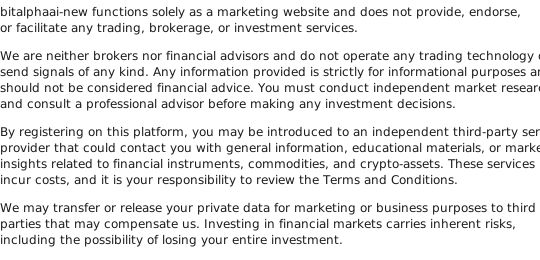
This website functions solely as a marketing platform and does not provide, endorse, or facilitate any trading, brokerage, or investment services.
Read More